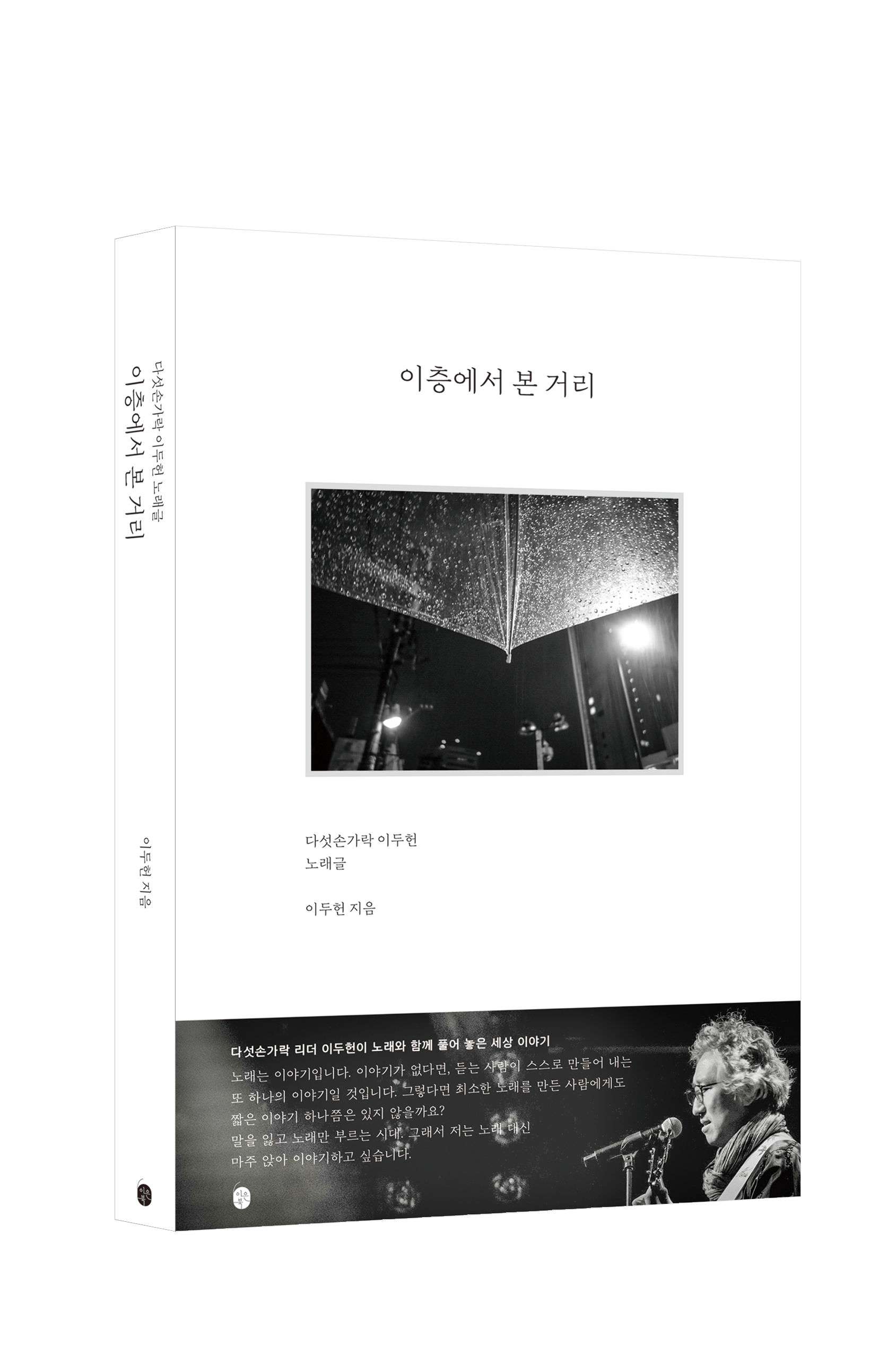
Lee Doo-heon, leader of the legendary band Five Fingers and a brilliant singer-songwriter, is generating excitement among fans with the release of his autobiographical essay ‘A Street Seen from the Second Floor,’ which encompasses his entire musical career. This book is a special record that fully unravels, through writing, the moments of life hidden behind numerous hit songs and the profound stories that couldn’t be fully expressed in music, promising to draw readers into the landscape of a bygone era.
Lee Doo-heon’s Life, Encountered Through Writing Beyond Music
Published by Eunbook, the essay ‘A Street Seen from the Second Floor’ is a work by Lee Doo-heon, leader of the group ‘Five Fingers’ and a singer-songwriter who expanded the lyrical horizons of Korean popular music, unfolding his life journey through the new medium of ‘writing.’ He captures countless fleeting moments on stage and emotions that couldn’t be fully expressed through lyrics, allowing readers to share the memories and confessions deeply embedded within him.
Beyond a simple memoir, this book fully embodies his philosophy that songs begin with stories before melodies. The honest stories hidden behind familiar masterpieces that graced an era of Korean popular music in the 1980s, such as ‘Red Roses on Wednesday,’ ‘Dawn Train,’ ‘Balloon,’ and ‘Can’t We Love,’ are once again illuminated through the perspective of author Lee Doo-heon. This is a record of his inner self and a heartfelt confession, not as a singer, but as an author.
Moments of Masterpiece Creation: Inspiration Drawn from Ordinary Daily Life
Author Lee Doo-heon calmly reflects on the memories and emotions that couldn’t be fully captured in lyrics, as well as the background moments of a song’s creation, thereby restoring the personal narrative embedded in each song through prose. Through this, readers embark on a special journey of memory, walking alongside an artist’s life, beyond just the experience of listening to music. The book particularly details the stories and inspirations behind still-beloved representative songs such as ‘Red Roses on Wednesday,’ ‘Dawn Train,’ and ‘Balloon.’
In his writing, readers discover how extremely trivial and ordinary moments—such as a college crush, a relationship that ended after just a few minutes, or a scene that suddenly came to mind on a rainy street—became the great starting points for his lyrics. Songs created from these fragments of daily life have, over time, settled into the memories of countless people, and now their hidden stories come to life even more vividly through his writing. He elaborates on emotions—such as the solitude and wandering of youth, and unfulfilled love—which were expressed in concise lyrics within his songs, now presenting them with richer stories and scenes in his prose.
An Inner Journey Presented by Solitude and Memory
The core sentiments pervading the entire book are none other than ‘solitude’ and ‘memory.’ Interestingly, the author views solitude not merely as an emotion to be avoided, but rather as the most gently comforting presence by one’s side. The wounds of youth, the lingering scent of bygone times, and the inexpressible temperatures of emotion deeply permeate throughout the sentences, leaving readers with a quiet yet profound resonance. This narrative approach is not just a simple reminiscence of the past; it offers an opportunity to revisit and quietly confront the complex emotions we have all encountered throughout our lives.
‘A Street Seen from the Second Floor’ offers the joy of discovering new layers in familiar songs for those who deeply love music, and a literary experience of following emotions and memories for those who appreciate the value of writing. Simultaneously, it provides a precious time to quietly confront one’s forgotten inner self amidst a busy daily life, delivering deep empathy and warm resonance to readers who, in an era overflowing with songs, wish to once again sit down with genuine ‘stories’.
Lee Doo-heon’s essay ‘A Street Seen from the Second Floor’ not only sheds new light on his musical legacy but is also a meaningful book that encourages us to look back at the hidden stories and emotions within our own lives. Through his honest confessions and delicate prose, readers will have a moving experience connecting their past memories with their present selves.